LOADING...
CENTRAL OPEN SPACE.
WITH URBANLAB. 2007.





|
This plan embraces a process-oriented, non-hierarchical, sustainable, openended
approach capable of evolving flexible and multi-functional spaces
that are continuously advancing with the long-term growth of the MAC. To
this end, we have developed a design strategy, or "genetic code" for the site
that deploys a series of landscape elements (patches and strands) that will
promote self-organizing environmental patterns to emerge over time.
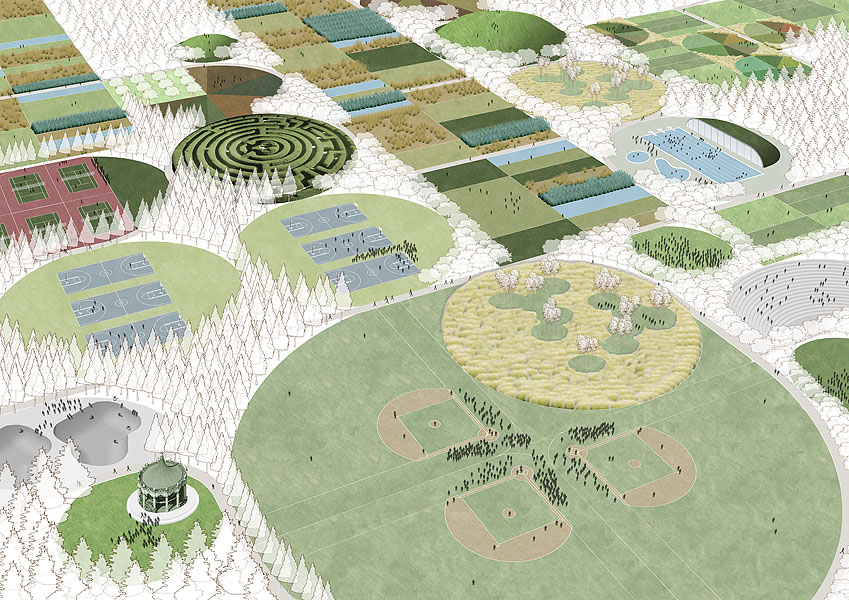
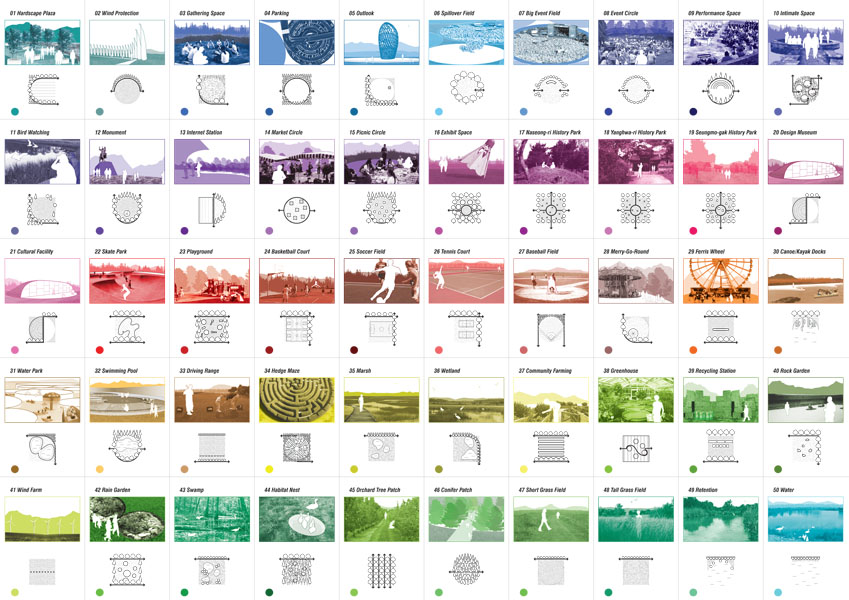
Our methodology fills the vast COS site with diverse ecological and social
"traits." Traits are the distinguishable characteristics of the patches and
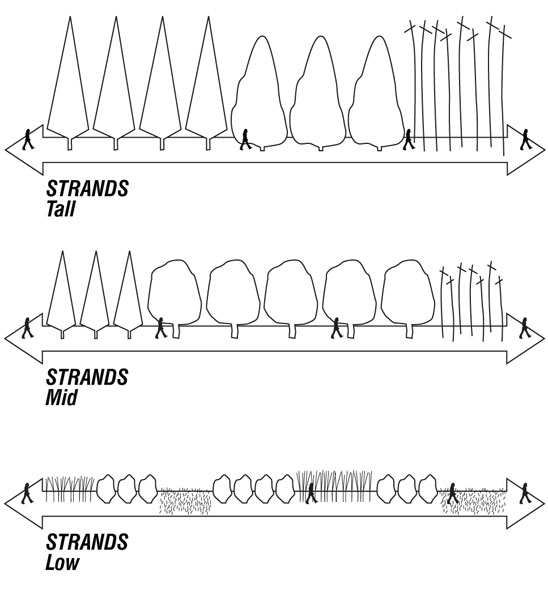
strands that comprise the organizational openwork of our proposal. Patches Patches are the basic unit of landscape that grows and evolves. Patches are non-linear surfaces that differ in size, shape, boundary and trait; and, they "grow" assemblages of plant and animal communities. Patches are organized either singularly or in clusters. We have initially selected a set of 50 patches to array over the COS plain. Each patch type displays varying social and ecological traits: Patches with Social Traits and Patchces with Eco Traits. Strands Strands are corridors of trees, grasses, and green infrastructure. They connect the 50 social and eco patches. Strands provide a continuous movement network between patches. Strands are the fuzzy or defined edges of patches; these edges cause cross-fertilization to occur between all strands and patches, and assure ecological permeability across the entire COS site matrix. |
|
|